
Hawaii Minimum Liability Limits
Every registered vehicle in Hawaii must carry liability insurance that meets the state minimum. Liability coverage pays for injuries and property damage you cause to other people; it does not pay for your own car or your own injuries.
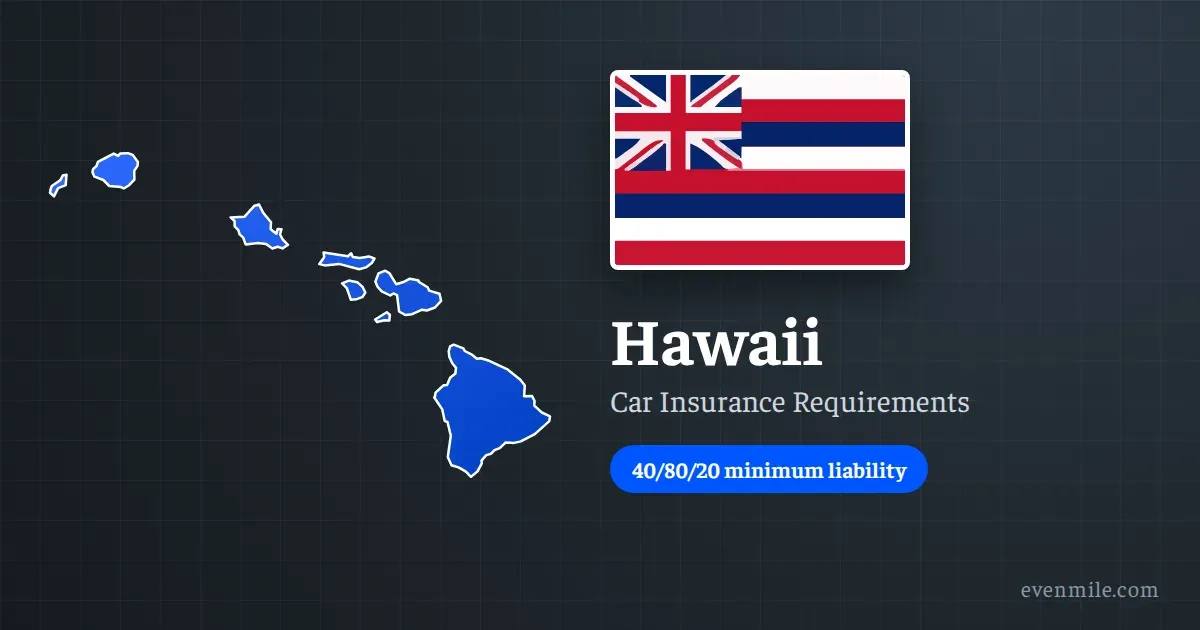
The minimum in Hawaii is written as 40/80/20: at least $40,000 for bodily injury to one person, $80,000 for all bodily injuries in one accident, and $20,000 for damage to other people's property.
Hawaii raised its liability minimums to 40/80/20 in 2026. If your policy was written before the change, check that it has been updated to the new limits.
Is the Minimum Enough?
A $20,000 property damage limit won't replace many late-model vehicles, which now average well over $48,000 new, and a single hospital stay can exceed $40,000. Anything above your limits can be collected from your savings, property or future wages. Many drivers choose 100/300/100 liability instead.
Other Coverage Required in Hawaii
Beyond liability insurance, Hawaii requires the following on every standard auto policy:
- Personal injury protection (PIP) of at least $10,000 per person
These coverages protect you and your passengers rather than other drivers, so they matter even when the crash isn't your fault.
At-Fault or No-Fault: How Claims Work in Hawaii
Hawaii is a no-fault state. After a crash, your own personal injury protection (PIP) pays your medical bills and certain other losses first, no matter who caused the accident.
You can step outside the no-fault system and sue the at-fault driver for pain and suffering only when an injury meets the state's legal threshold. Property damage is still handled on an at-fault basis, so the driver who causes the crash pays for the other vehicle through property damage liability.
Proof of Insurance and Penalties
Keep proof of insurance in the vehicle and show it when a police officer asks, after a crash, and when you register or renew your registration. Most insurers issue a digital ID card in their app; check with the motor vehicle agency whether Hawaii accepts electronic proof in every situation.
Penalties for Driving Without Insurance in Hawaii
| Fines | $500–$5,000 |
|---|---|
| Jail time | Up to 30 days for repeat offenses |
| License and registration | License suspension of three months to one year; SR-22 filing for three years |
These are the possible penalties under Hawaii law; the lower amounts usually apply to a first offense, and penalties grow with repeat offenses. Court costs and reinstatement fees can add hundreds of dollars more. Confirm current amounts with the Hawaii Insurance Division or the motor vehicle agency before relying on them.
Uninsured drivers who cause a crash are also personally responsible for every dollar of the other people’s medical bills and repairs.
What Car Insurance Costs in Hawaii
Statewide averages published in 2026 put a state-minimum liability policy in Hawaii at about $475 a year (roughly $40 a month). A full coverage policy with 100/300/100 liability plus collision and comprehensive averages about $1,757 a year (roughly $146 a month).
Your own price can be much higher or lower depending on your ZIP code, age, driving record, vehicle, annual mileage and, in most states, your credit-based insurance score. Comparing quotes from at least three insurers with identical limits and deductibles is the most reliable way to find a fair price.
Estimate your Hawaii premium with our rate calculator or read our guide to comparing car insurance quotes.
Get Weekly Updates on Hawaii Insurance Rules
Subscribe to our weekly newsletter for changes to state minimums, rate trends and practical ways to lower your premium without cutting protection.
Frequently Asked Questions
Hawaii requires at least $40,000 of bodily injury liability per person, $80,000 per accident and $20,000 of property damage liability (40/80/20). The state also requires: personal injury protection (PIP) of at least $10,000 per person.
Yes. Hawaii is a no-fault state, so your own PIP coverage pays your medical bills first regardless of who caused the crash. You can sue the at-fault driver only if the injury meets the state threshold.
No. Liability coverage pays only for damage you cause to other people and their property. Repairs to your own car require collision coverage, and theft, hail, flood or animal damage requires comprehensive coverage. Lenders and leasing companies usually require both.
Sources
- Hawaii Insurance Division (official website)
- Find your state motor vehicle agency (USA.gov)
- Hawaii Insurance Division: Auto insurance minimum limits FAQ (2026)
- Insurify: Penalties for driving without insurance by state (updated October 4, 2026)
- NAIC: State insurance department directory
- CarInsurance.com: Minimum liability car insurance requirements by state (2026), average premiums
Requirements on this page were last checked against these sources on September 28, 2026. State laws change; confirm current requirements with the state before you buy a policy.


