Understanding Comprehensive Auto Coverage
Comprehensive insurance pays to repair or replace your vehicle when it suffers damage from non-collision events outside your direct operational control. While collision insurance handles impact with other cars or stationary structures while driving, comprehensive steps in when your automobile is damaged while parked, stolen from your driveway, or affected by environmental hazards.
This coverage functions as a primary protective shield against incidents that no defensive driving habit can prevent. A parked car remains continuously exposed to heavy hailstorms, sudden branch collapses, flash floods, stray gravel cracks, rodent wire chewing, or catalytic converter theft. Without this rider, the entire financial burden of repairing or replacing your automobile falls entirely on your personal savings.
Lender and Leasing Requirements
While state laws across the United States only require drivers to purchase minimum liability insurance, banks and auto leasing companies almost always require full coverage — which includes comprehensive and collision — until the car loan is completely paid off.
Covered Perils vs. Standard Exclusions
Insurance policies explicitly define the perils eligible for reimbursement. Comprehensive insurance is commonly referred to as other-than-collision insurance because it specifically isolates external, unpredictable incidents:
- Severe Weather and Natural Events: Hail dent repairs, tornado destruction, hurricane winds, lightning strikes, ice storms, and flood submersion.
- Theft and Vandalism: Total vehicle theft recovery, broken door locks, keyed exterior paint, smashed side windows, and stolen parts like wheels or catalytic converters.
- Animal Collisions: Striking a deer, elk, bear, or turkey on highway roads (classified strictly as comprehensive rather than collision).
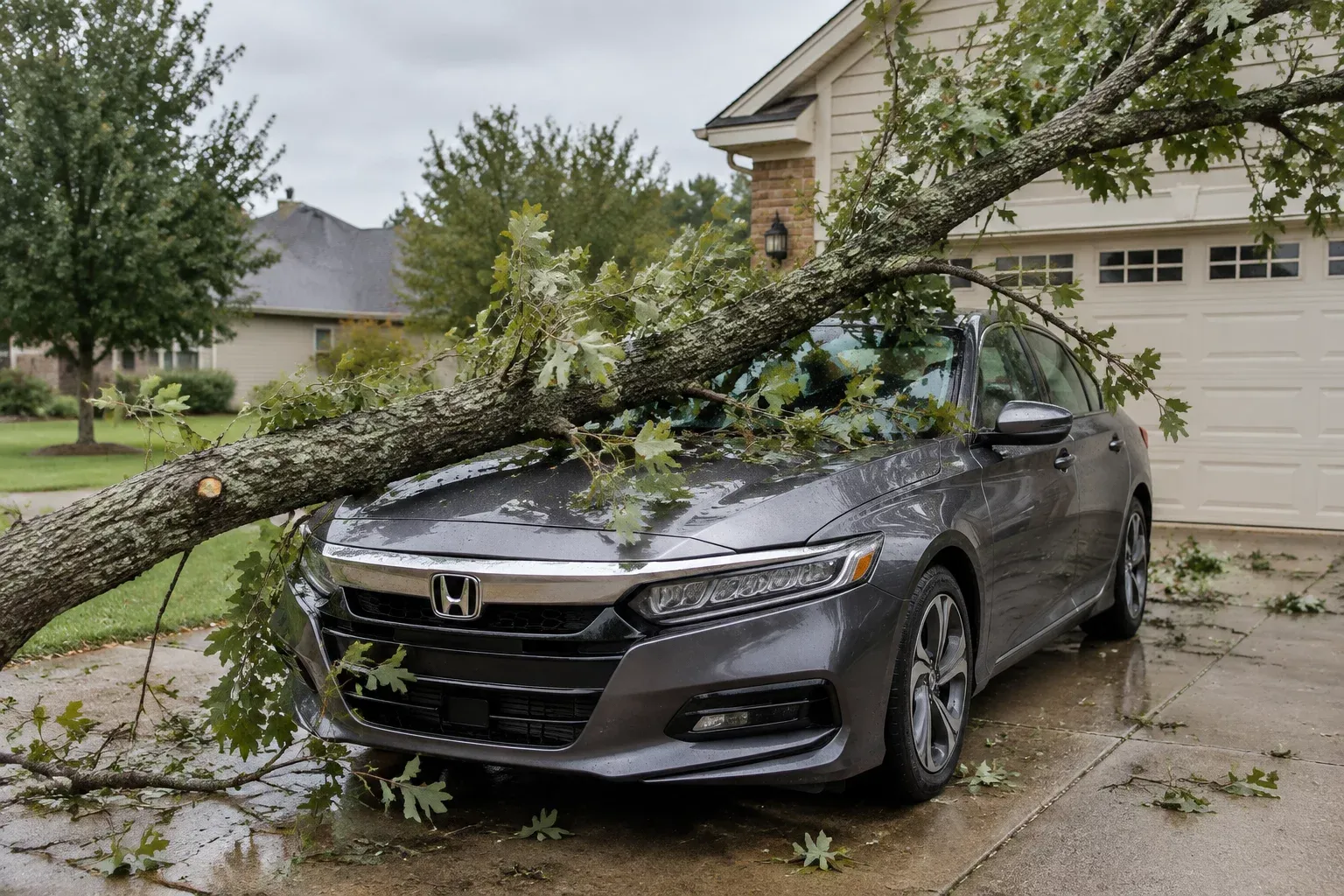
- Falling or Airborne Objects: Smashed windshields from flying gravel, tree branches falling during windstorms, or collapsed carport structures.
Standard exclusions apply consistently across carriers. Comprehensive will not reimburse normal mechanical wear, engine breakdowns, interior wear, or personal electronics left inside the car. Stolen personal items like laptops or luggage must instead be claimed under homeowners or renters insurance.
Deductibles, Actual Cash Value, and Payouts
When you file a comprehensive claim, payout calculations depend on your selected deductible tier and your vehicle’s actual cash value at the time of the loss:
Selecting Your Deductible
Deductibles typically range from $100 to $1,000. Selecting a higher deductible lowers annual policy premiums, but requires greater immediate cash out-of-pocket when repairing storm or glass damage.
Actual Cash Value (ACV) Limits
If your vehicle is stolen or totaled by severe flood waters, comprehensive coverage pays the vehicle’s pre-accident market value minus your deductible, factoring in mileage and market depreciation.
Many insurance providers also offer zero-deductible full glass repair endorsements in select states, allowing policyholders to fix stone chips or replace shattered windshields without paying the primary comprehensive deductible.
When Is Comprehensive Coverage Worth Having?
Deciding whether to carry comprehensive coverage involves comparing the cost of coverage against your car's market value and geographic risk profile. If you live in regions subject to frequent hailstorms, high theft rates, heavy deer populations, or flood zones, comprehensive provides invaluable peace of mind for a relatively modest annual premium.
A common rule of thumb: consider dropping comprehensive and collision when their combined annual cost is more than about 10% of what the insurer would pay if the car were totaled (its actual cash value minus your deductible). This often happens once a car is worth less than about $4,000. For newer automobiles, leased vehicles, or financed vehicles, maintaining comprehensive coverage remains an essential financial safeguard.
Get Free Insurance Tips Delivered to Your Inbox
Receive practical guides on choosing policy limits, deductible strategies, and money-saving auto insurance updates.
Frequently Asked Questions About Comprehensive Coverage
Yes. Directly striking a wild animal such as a deer, elk, or coyote is covered under comprehensive insurance. However, if you swerve to avoid an animal and hit a guardrail or tree, that is classified as a collision claim.
Yes, windshield and auto glass damage caused by gravel, falling branches, or vandalism is covered by comprehensive insurance. In several states, insurers offer zero-deductible glass repairs as an optional or mandated policy feature.
No. Comprehensive insurance covers damage to the vehicle itself and its permanently installed original equipment. Personal belongings such as laptops, luggage, and phones are covered through renters or homeowners insurance policies.


